

Islamic State tries its luck
As the Malian Army struggles with the JNIM/FLA coalition, IS moves in.

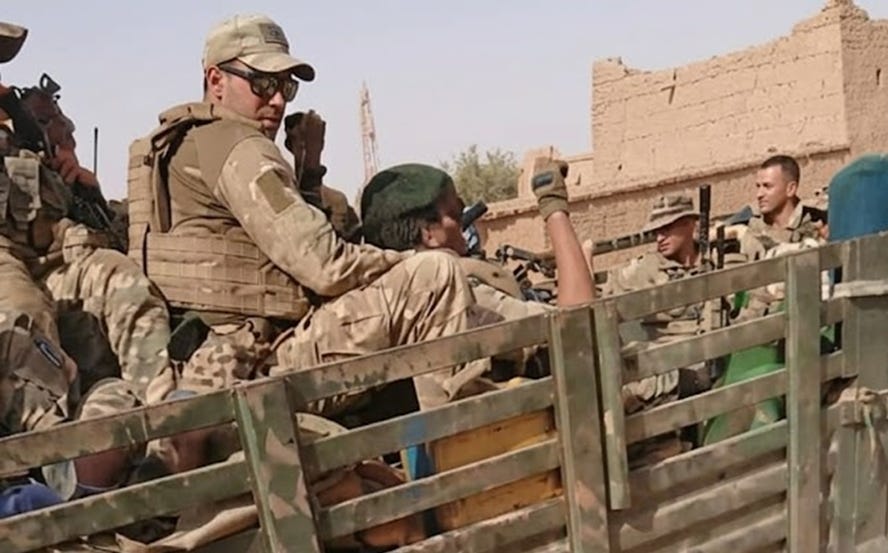
The Islamic State - Sahel Province
As Malian bases fell or came under siege over the weekend and the Malian Army attempted to respond to minimise the impact, the Islamic State initiated its own attacks.
ISSP (Islamic State Sahel Province), another jihadist group fighting against the government, and also against JNIM, attempted to take advantage and expand their control. ISSP operate in the far east of the country in the tri-border areas between Mali, Burkina Faso, and Niger. The goal was to seize bases of their own while FAMa and the Africa Corps support forces were focused on the JNIM/FLA offensive elsewhere.
Read about that here:

Their first strike was on the town of Labbezanga, located on the Mali-Niger border. Labbezanga hosts the iconic former French Army fort styled in the 17th-century “Vauban” star fortress style.
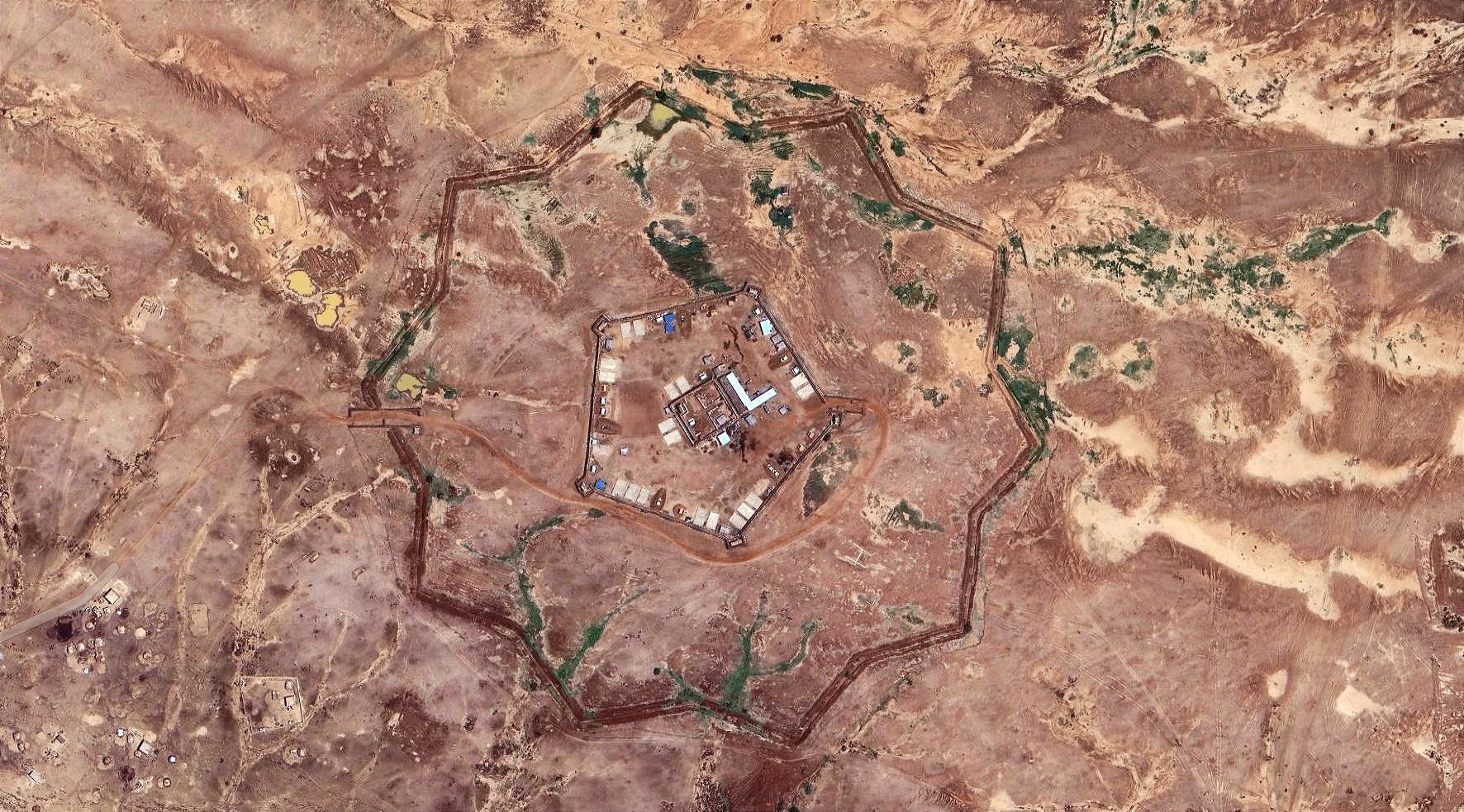
The base at Labbezanga is one of the smaller outpost bases used by FAMa and was quickly overwhelmed by the ISSP attack as reinforcements were unavailable for quick deployment. The FAMa and AC forces withdrew north towards the fortified town of Ansongo. This withdrawal was notably different to where they had withdrawn from JNIM and FLA attacks. Elsewhere in the country, where a base has been given up, the JNIM/FLA coalition has allowed for the escorted withdrawal of FAMa and AC forces. In this case, however, ISSP continued to attack, hitting the government forces as they retreated.
After their success in Labbezanga, ISSP then attempted to take their prime target. The eastern city of Menaka. Menaka sits some 200km east of the nearest town, Ansongo. The city is completely isolated, surrounded by rural areas with relatively unrestricted ISSP movement.
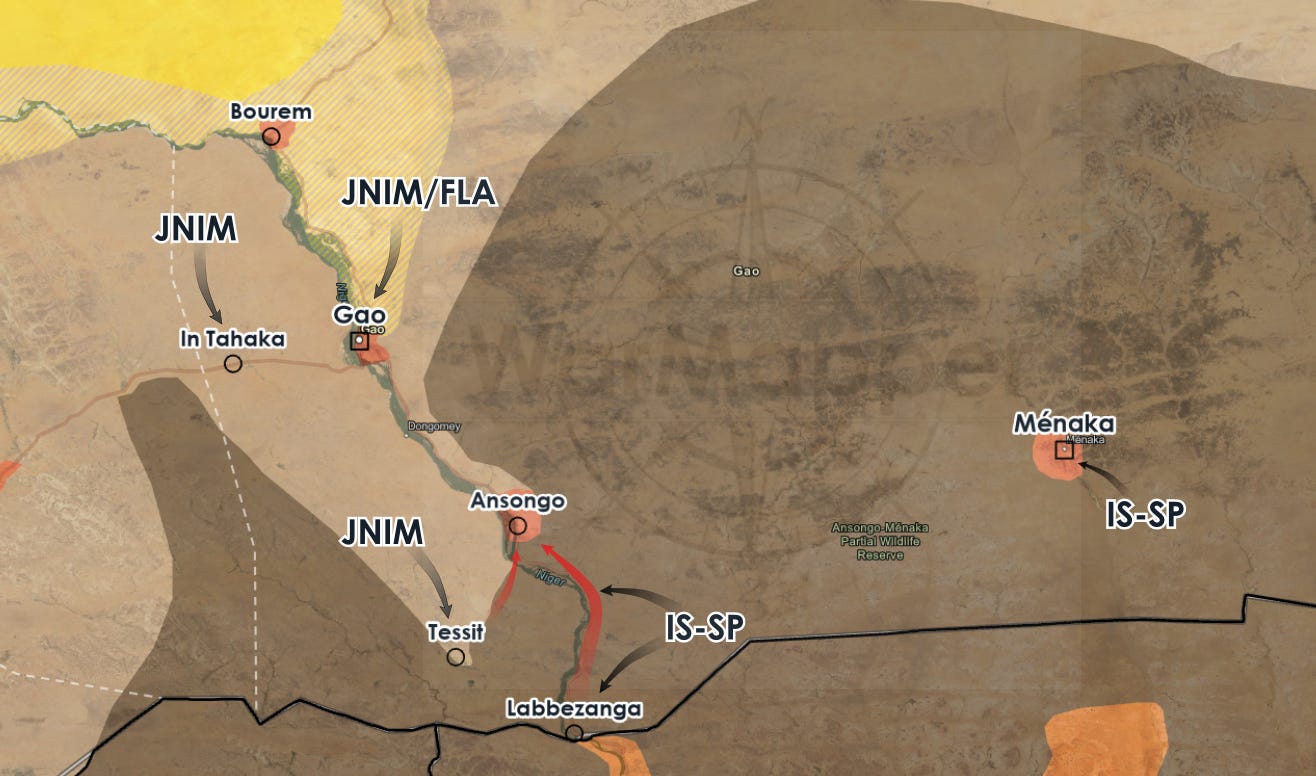
ISSP moved in and took control of the residential areas of the city. But on the western entrance, there is the former MINUSMA military base, now occupied by FAMa and the Africa Corps. This base is one of the largest and is almost twice the size of the base in Kidal.
Despite initially taking control of the city, ISSP could not breach the camp. The government forces then carried out a counterattack and, after several hours of fighting, took back complete control of the city, forcing the ISSP fighters out.
ISSP was unable to recreate the successes seen by JNIM and the FLA elsewhere in the northeast of the country, likely due to a lack of planning, equipment, and a more sizeable garrison.
Further bases fall to the coalition
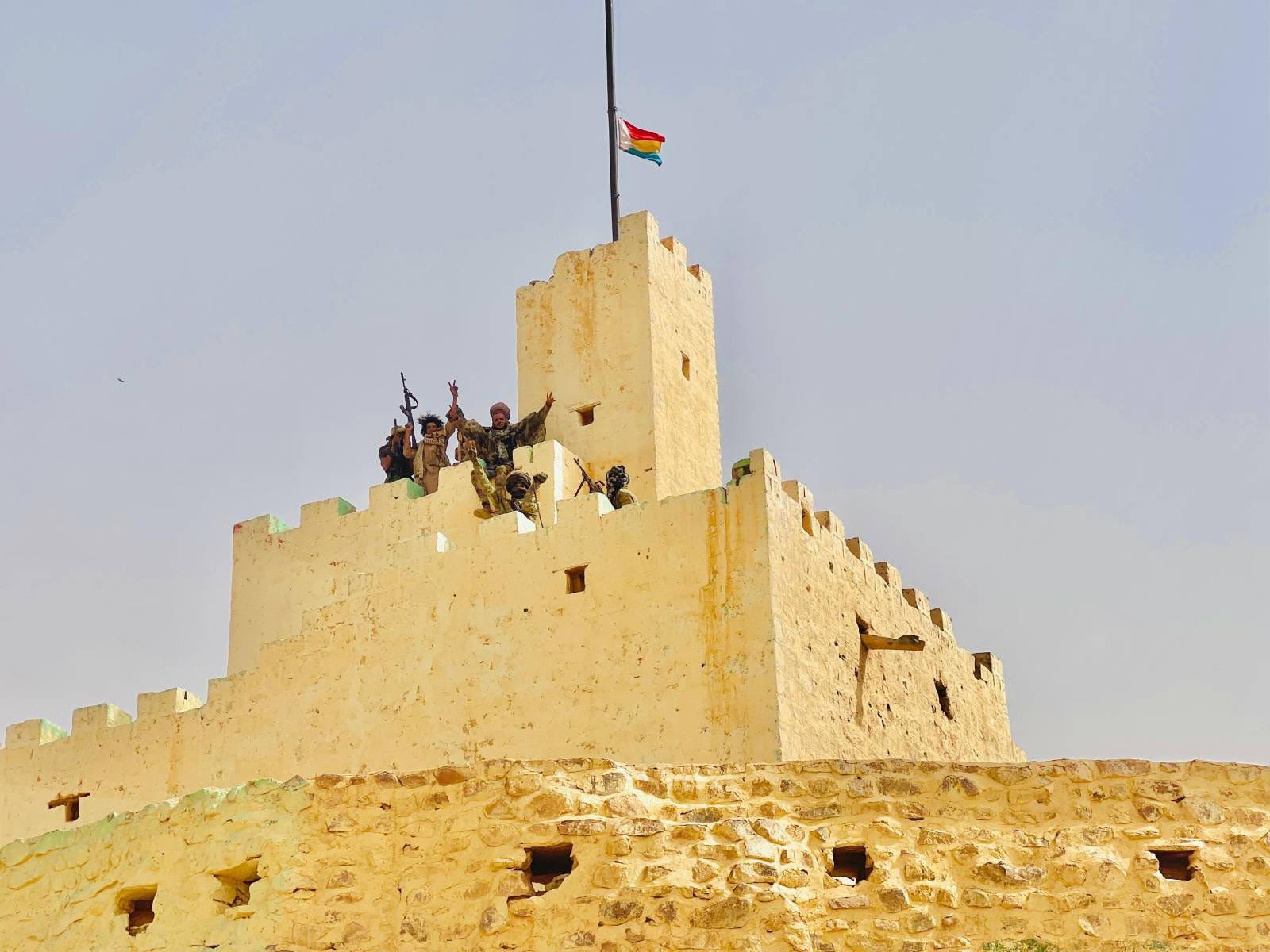
Since the initial bases captured over the weekend, the coalition has continued attacks and taken control of new bases. In the FLA heartland, the coalition took control of the city and nearby military base of Tessalit, the most northerly FAMa deployment.
The only bases thought to still be under control of FAMa and the Africa Corps in the Kidal region are the bases at Anéfif and Aguelhok. The forces that withdrew from Kidal over the weekend were reportedly escorted to Aguelhok by the FLA, via Anéfif.
JNIM militants also seized the Gold mines of N'tahacka and the military base nearby, located west of Gao. Gao itself, although almost taken in the attacks over the weekend, appears largely to be back under the control of the garrison.
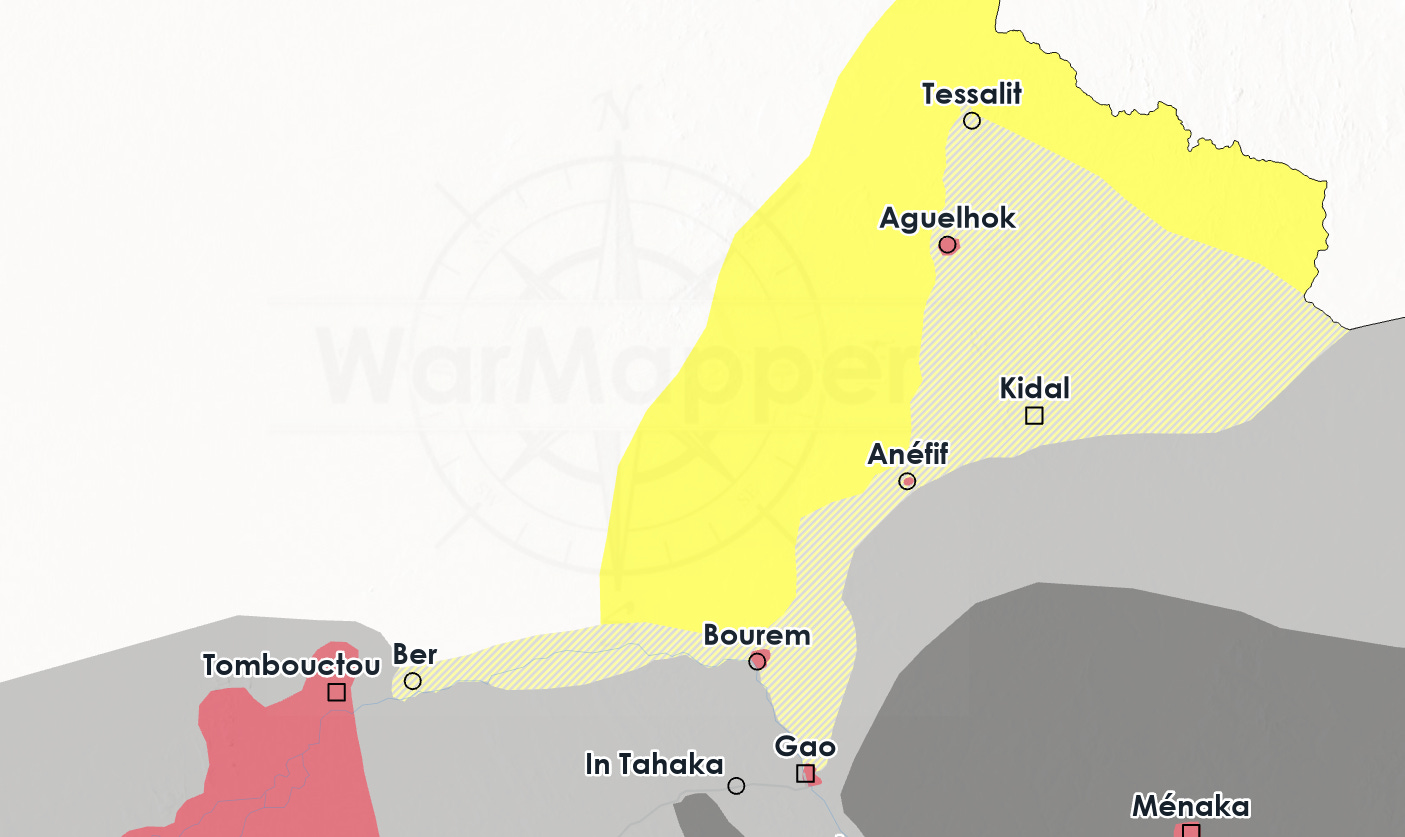
Importantly, the coalition has also moved west towards the ancient city of Timbuktu, taking control of the base in Ber on the northern bank of the Niger River. Ber is the last FAMa outpost before the city of Timbuktu. Coalition fighters also attacked outposts south of the River, though whether they were able to take control is unclear.
The JNIM/FLA arsenal grows
In previous attacks on the smaller government outposts over the past years, JNIM and the FLA have often managed to secure more ammunition, small arms, pickups, and occasionally cash.
This time, things have been different. They have struck much larger bases and prevented the forces within from withdrawing with the more valuable equipment. This has meant that they now have in their arsenal some new toys to play with.
Equipment that has been confirmed to have fallen into the coalition’s hands is heavy armoured vehicles, including Chinese Norinco VP11 and Russian Checkan MRAPs (Mine Resistant Ambush Protected vehicles). A BTR-82A, as well as other MRAPs and armoured vehicles, have been seen captured and operational since the attacks began.
The base in Kidal included an airstrip where Malian TB2 drones were operated from. Left at the base was a TB2 control station. So far, no imagery has been shared to suggest that any drones were captured at the base.
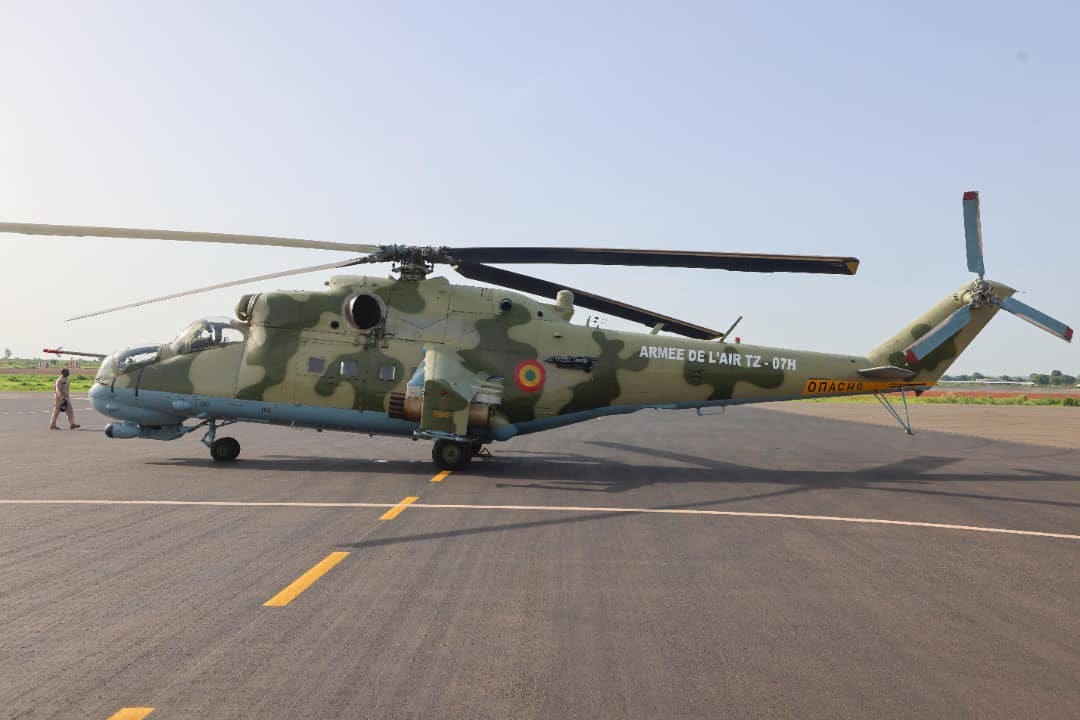
Further north, at the Tessalit base, the coalition was seen with a Malian Mil Mi-24P helicopter and a stockpile of S8 rockets, which can be fired by the aircraft. The coalition almost certainly does not have personnel capable of operating the aircraft, and the helicopter may well not be operational; if not already, it would almost certainly have been made so before the army withdrew from the base. That being said, pickup trucks operated by rebel groups have regularly been modified to install the rocket pods on the back to create improvised rocket artillery technicals, so these captures are not irrelevant.
As it happens, the Mi-24P in question is TZ-07H, an airframe that, according to Oryx, was previously damaged after an attack on Mopti airfield back in April of 2022.
Bamako
Aftermath of attacks
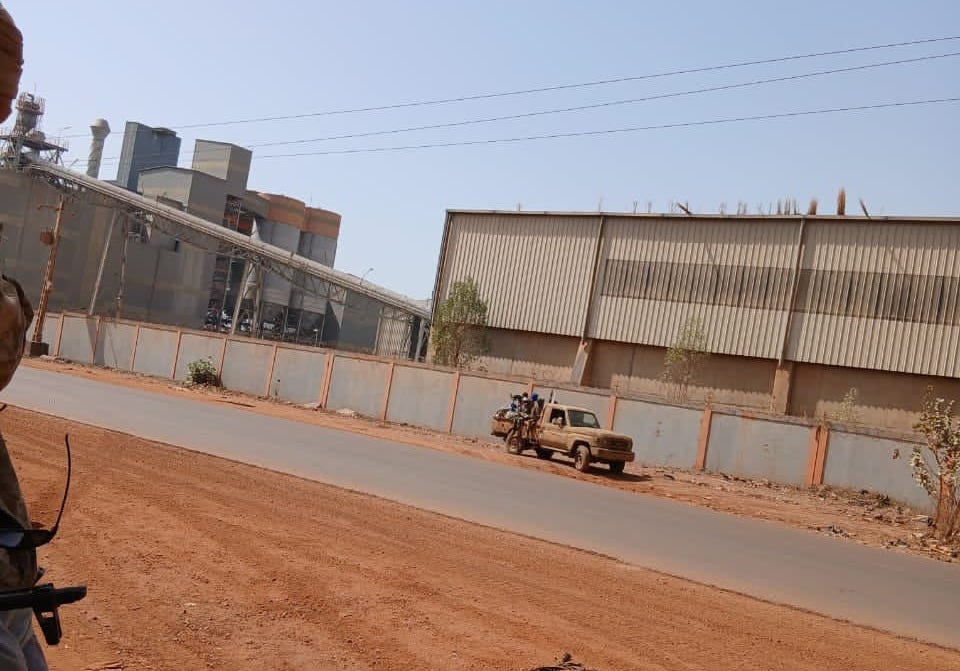
One of the primary targets in the Bamako area was the very large military base located in Kati, directly north of the capital. Kati was also the location of the Defence Minister, who was killed in the SVBIED attack on Saturday morning.
High-resolution satellite imagery has now been published by Vantor, showing the aftermath of the attack on the Defence Minister’s home. The damage is significant. Not only was the Minister’s home totally destroyed, but almost all buildings within a 100m radius of the blast were also completely wiped out.
Defence Minister Camara was not the only official directly targeted in the attacks. National Intelligence Chief Modibo Koné was also reportedly attacked and, while injured, has survived.
Initially, after the attacks, there was silence from the ‘interim’ President (5 years and counting), Assimi Goïta. As a result, there was growing speculation of an internal power struggle to replace him or that he had been killed in another attack. On Tuesday evening, though, he made a televised address to the nation, apparently unharmed and in control.
Fighting in Kati continued into the beginning of the week as FAMa began clearing operations. After the initial attacks, JNIM militants had been seen roaming relatively freely within and around the capital.
JNIM begins a siege
On Tuesday, JNIM spokesman Abu Hudhaifa Al-Bambari announced that a blockade would begin on the capital. JNIM previously imposed temporary blockades for fuel entering Bamako and other major cities. This blockade is broader and covers all vehicles entering or leaving the capital.
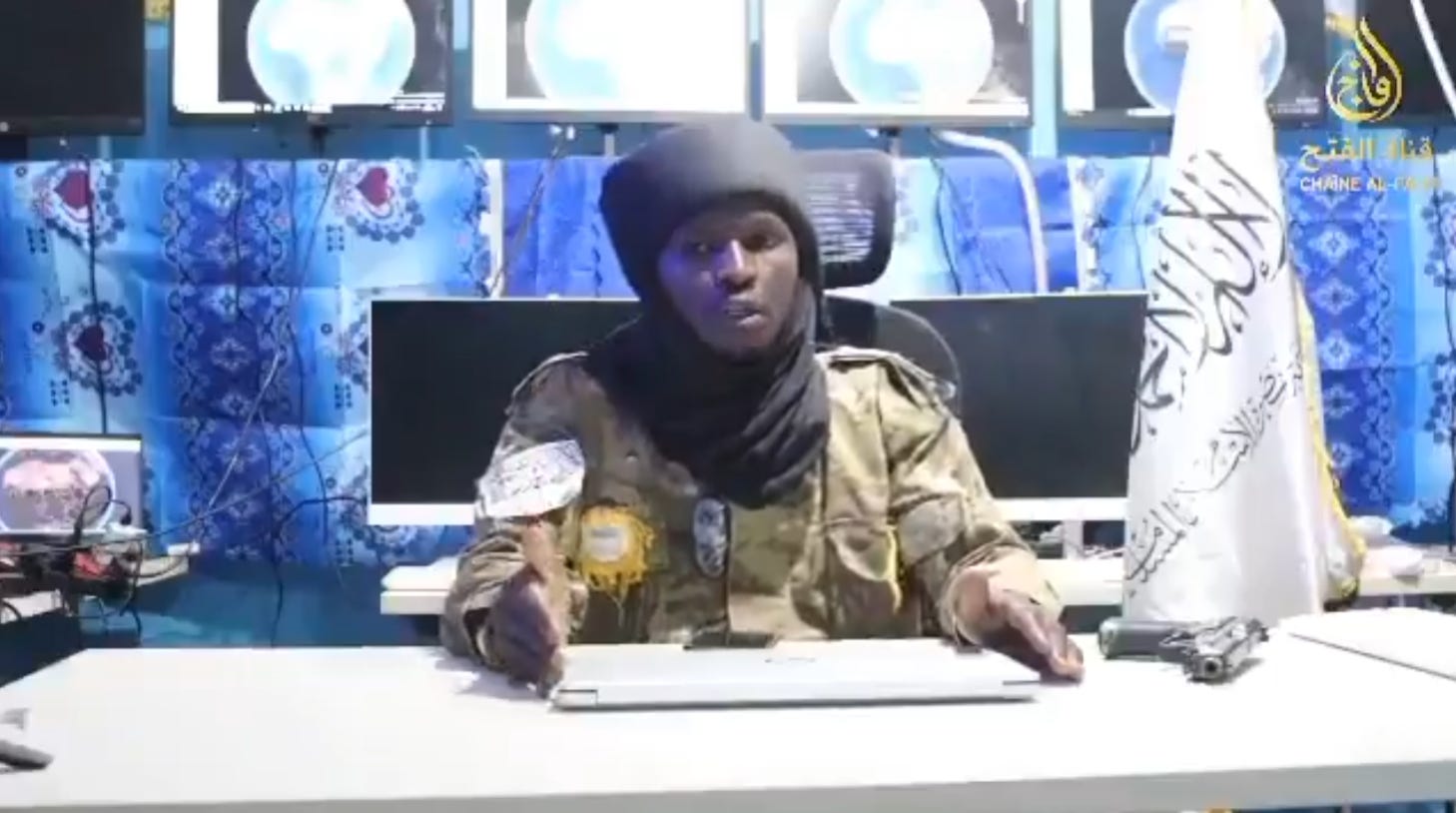
This blockade is a significant move under the current circumstances. It shows that this operation was not a one-weekend hit and grab. Applying this pressure on the capital now will force the government to focus its efforts here, rather than allowing it to deploy reinforcements to the precarious positions in the northeast of the country.
Instead of likely being able to secure frontline bases and carry out operations to push back and reverse coalition gains, the government is on the back foot, having to focus its attention on the heart of the country.
What to look out for next
The actions taken by the government forces over the next few days will be crucial. With discontent in the army structure, claims by Malian officials that the Russian forces “betrayed” them, and a possible attempt at a leadership change, there are significant internal issues that must be addressed quickly.
Distrust between forces and leadership being distracted by internal power struggles would make decisive, broad actions against the coalition more challenging than it already is.
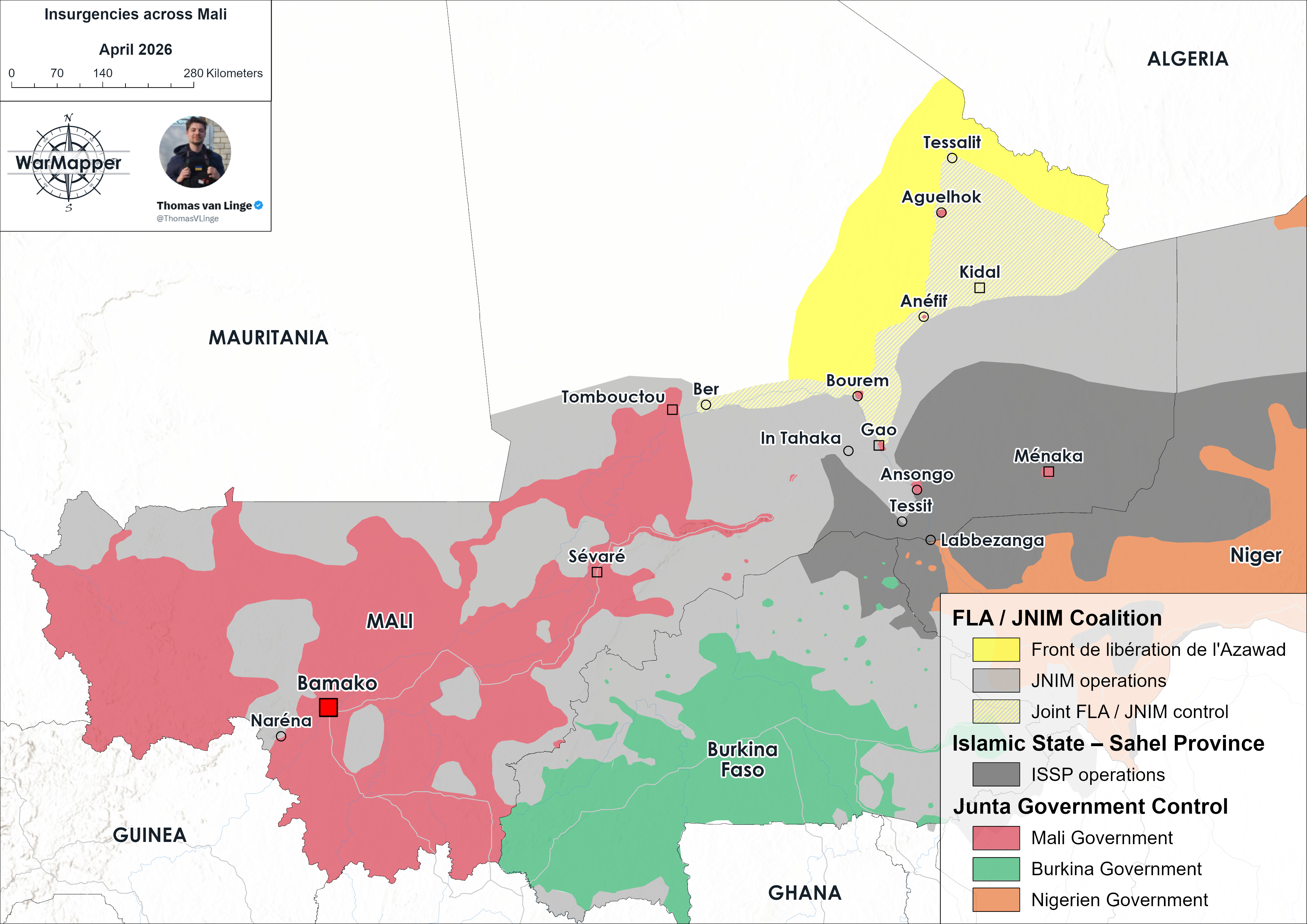
Counterattacks are being carried out, but not to the degree required yet to start retaking territory. With the blockade of the capital now underway, decisions must be made about where resources are deployed. JNIM have shown that they are capable of infiltrating deep into the most secure parts of the city and can strike at leadership.
A decision to deploy forces to better secure the city will mean fewer reinforcements to positions elsewhere in the country. As the coalition advances towards Timbuktu and pushes west of Gao, the bases in their path must be reinforced to ensure they hold.
Forces in Sévaré were only just able to hold on to the city during the initial attacks, with reinforcements gradually arriving in the area that was involved in the successful attacks further north and east; another attack on the city could be imminent. The same is true for Gao, where the forces have managed to retain control of the airport and main military base, but have not been able to resecure the city.
Hello, I’m Lily! Would so love you to read my latest article, I write mostly about safety and security, which is relevant to everyone 🕷️ Black Widow Security is my personal brand and I would love a like/comment/restack if it’s your thing! Thank you 👇
https://blackwidowsecurity.substack.com/p/your-instincts-are-better-than-you?r=80mhgh&utm_medium=ios