

Mali Hit by Major Coordinated Offensive
Cities and military sites across Mali targeted in large-scale offensive operations.

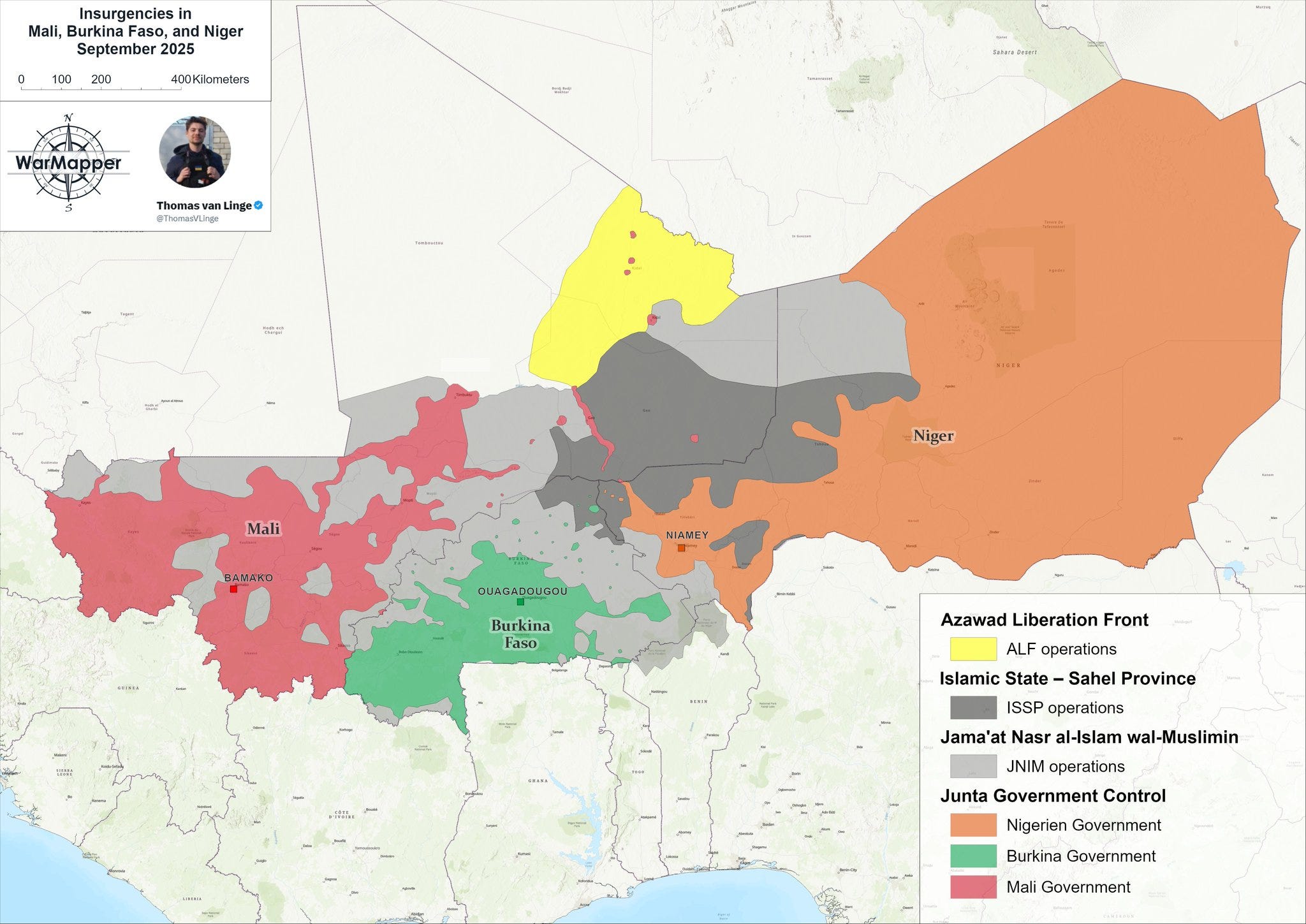
On Saturday, 25th April, Mali was struck by a large-scale coordinated offensive across multiple cities and military installations simultaneously. The attacks were carried out jointly by the jihadist group JNIM (Jama’at Nusrat al-Islam wal-Muslimin) and the Azawad separatist group, the FLA (Front de libération de l’Azawad). From the capital Bamako in the southwest to Kidal in the northeast, the Malian Armed Forces (FAMa) came under pressure on several fronts at once. These attacks were a significant escalation in an insurgency that has plagued the country for years.
Kidal
The most consequential attacks of the weekend unfolded in Kidal, in the far northeast. Kidal was the unofficial capital of the Azawad separatists until it was retaken by FAMa and Wager forces at the end of 2023.
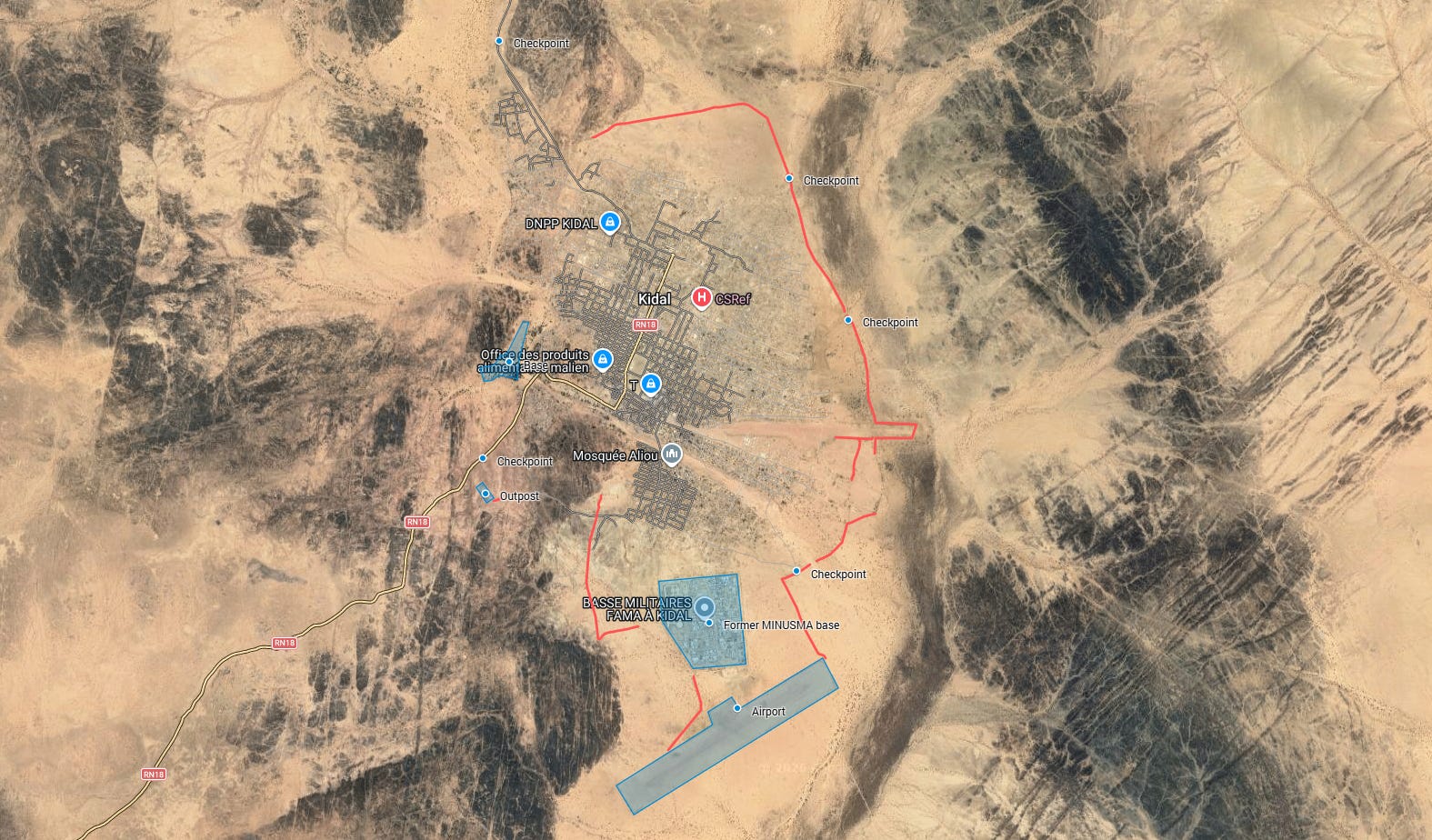
FLA and JNIM forces entered the city and rapidly gained the upper hand. FAMa and Africa Corps quickly lost control of the city itself and fell back to their stronghold at the former MINUSMA base and airfield to the south of the city.
What followed was a significant moment for the Russian presence in Mali. An agreement was reached between Africa Corps and the FLA, allowing the Russian forces to withdraw north to the city of Tessalit. Crucially, this agreement only covered the Russian forces, and their FAMa colleagues were left encircled.
Not all Russian equipment at the base was permitted to leave. Pickup trucks and lorries were seen departing with their beds filled with the mercenary fighters. But none of the armoured vehicles the Africa Corps is known to have in Kidal was seen in the departing convoy. Some of these were already abandoned inside the city when the forces withdrew to the main base.
In a further blow to the Malian government, some pro-government GATIA militiamen (a local Tuareg defence group) who had arrived as reinforcements for the government reportedly ended up defecting to the FLA.
The FLA subsequently released a statement declaring full control of Kidal city. The statement carried additional significance beyond the military outcome: in it, the FLA formally announced their partnership with JNIM. JNIM released a parallel statement of their own claiming control of Mopti and Kidal and similarly acknowledging the alliance.
While cooperation between these two groups has been an open secret for some time, with fighters frequently moving between them, this is the first formal public declaration of partnership. It is a development that could complicate international support for the FLA, which has until now attempted to present itself as a more secular separatist movement rather than an Islamist one.
Gao and Bourem
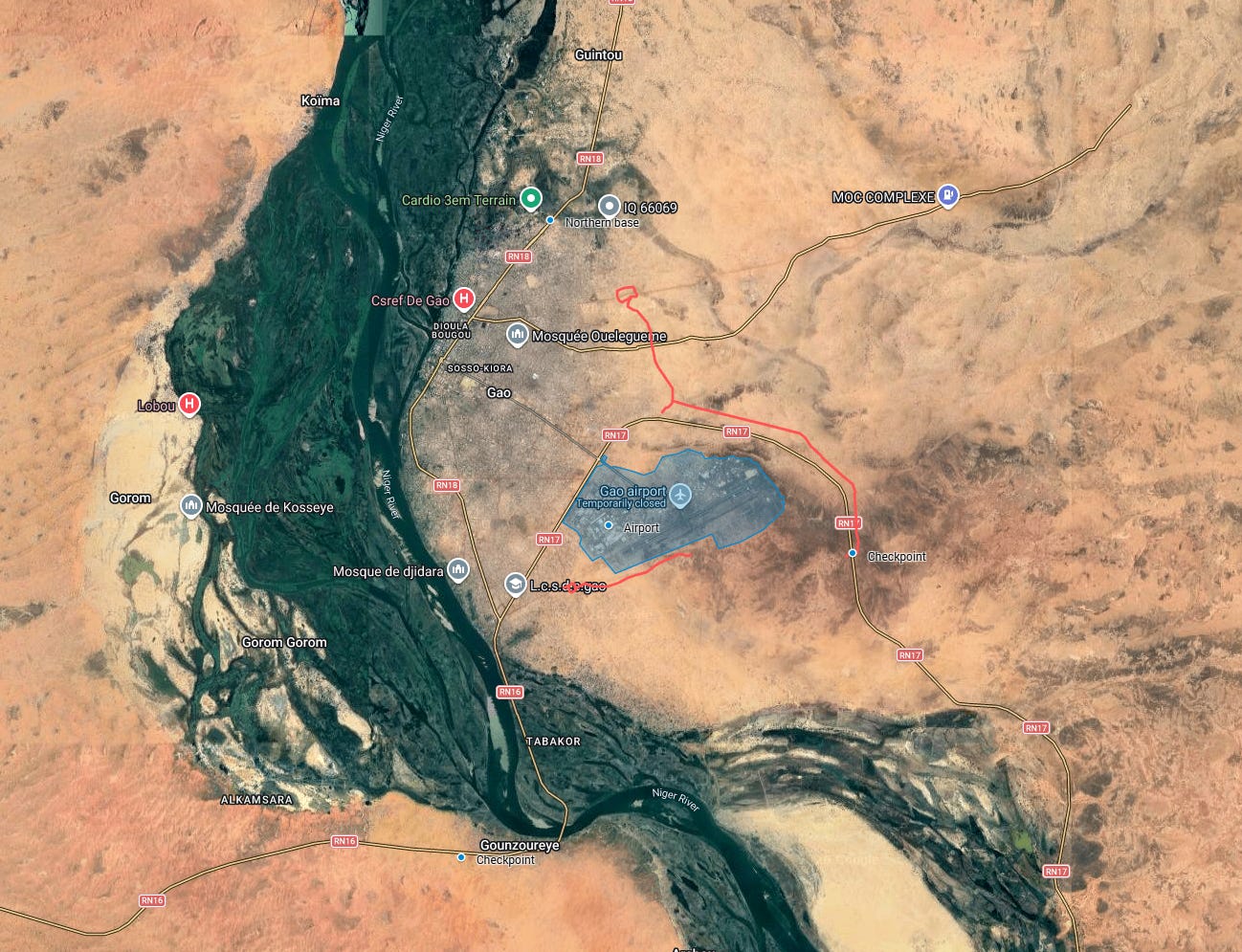
In Gao, FLA forces captured a military base on the northern road into the city. As was the case in Kidal, it appears that the core of the FAMa and Africa Corps forces took up positions in the airport, where a military base is located.
Mirroring events in Kidal, talks were reported to be ongoing between the Africa Corps contingent and the FLA to allow another Russian withdrawal from the former MINUSMA camp. At the time of writing, no agreement is confirmed to have been reached.
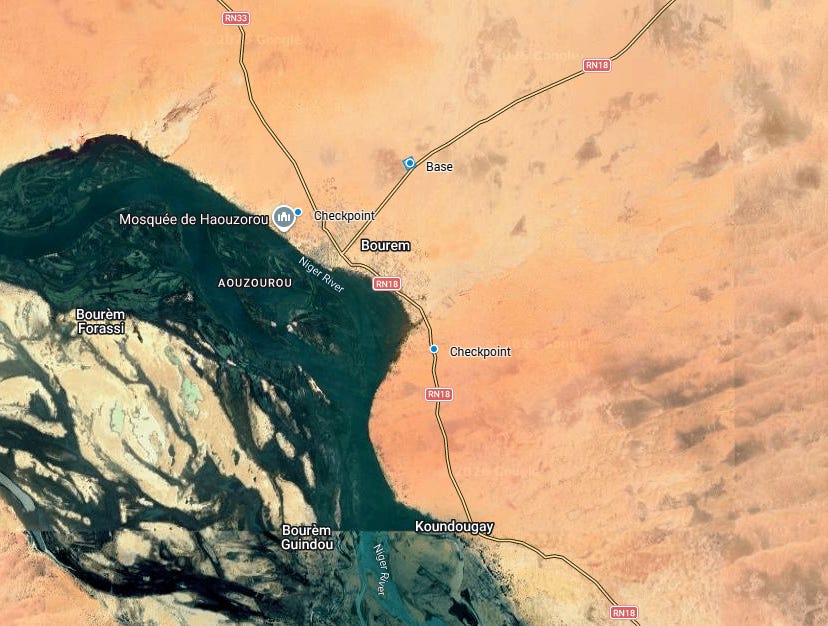
In Bourem, a small town on the road between Gao and Kidal, JNIM captured the local military base.
Bamako
The capital was not spared in the attacks, though this part of the country is out of the FLA’s reach and well within JNIM’s operating areas. JNIM struck FAMa and Africa Corps forces at Modibo Keita International Airport, as well as hitting the major military base at Kati on the northern outskirts of the city.
The video below is of a Russian mercenary defending Bamako International Airport from the JNIM attack early Saturday morning.
Most significantly, Defence Minister Sadio Camara was killed in an SVBIED (suicide vehicle-borne improvised explosive device) attack on his home. Several members of his family were also killed in the strike. Sadio Camara had been a central figure in Mali’s deepening relationship with Russia, and his death may have significant implications for that partnership going forward.
By the afternoon, JNIM had withdrawn from Bamako or been defeated within the city. Footage circulated online of alleged attackers being lynched by members of the public. Fighting at the Kati base, however, continued on Sunday morning after an initial withdrawal by JNIM overnight.
Sévaré and Mopti
JNIM forces attacked and took control of the two main military bases in Sévaré, capturing a significant quantity of ammunition in the process. FAMa and Africa Corps once again were forced to withdraw and take up positions at the airport. JNIM reinforcements reportedly continued flowing into the city for hours after the initial assault began. Fighting in Sévaré was some of the most intense over the weekend and continued all of Saturday.
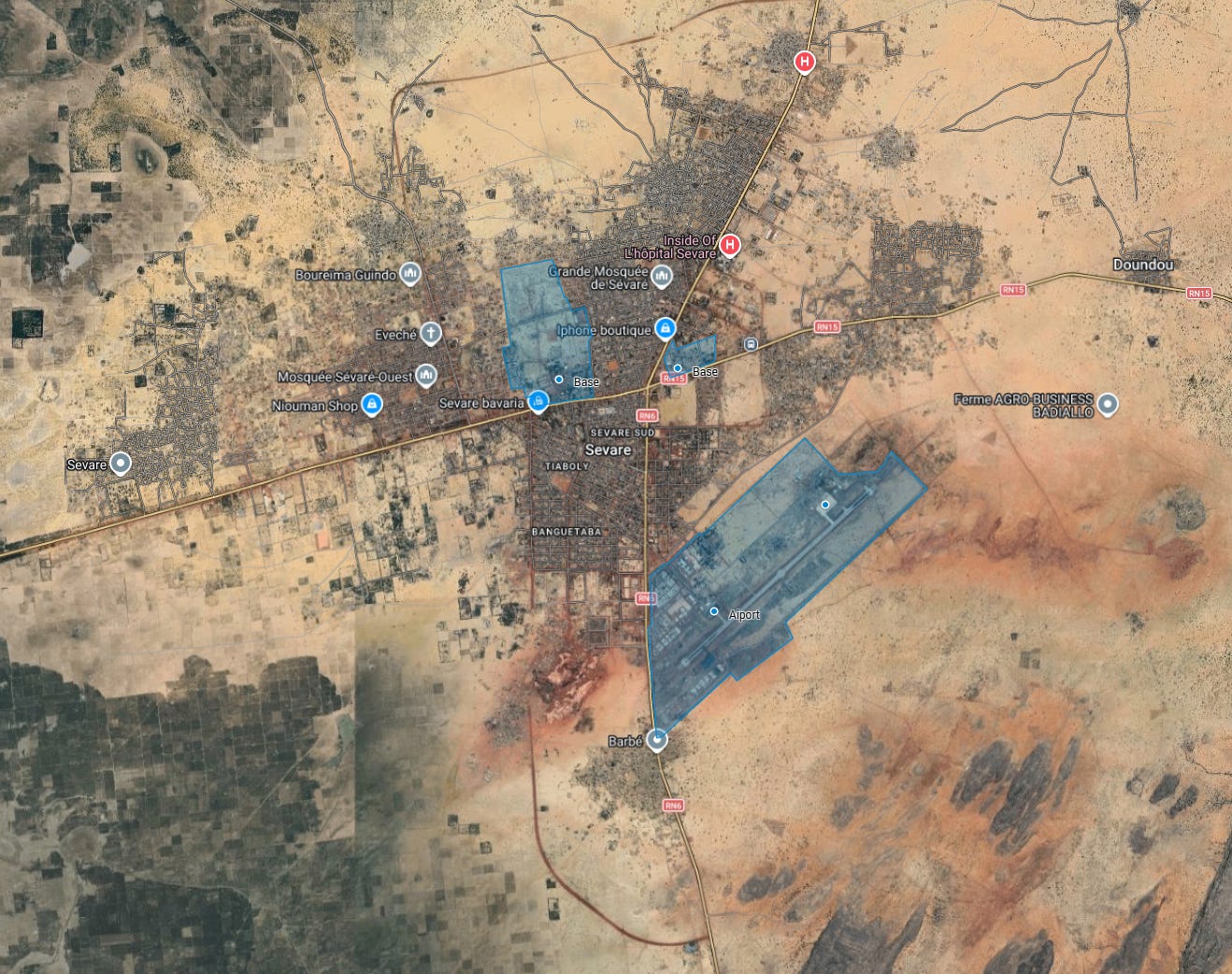
Africa Corps conducted helicopter strikes against JNIM positions during the battle in defence of the airport. An SVBIED attack was attempted but stopped by the pro-Government forces, with Africa Corps releasing an image of the vehicle.
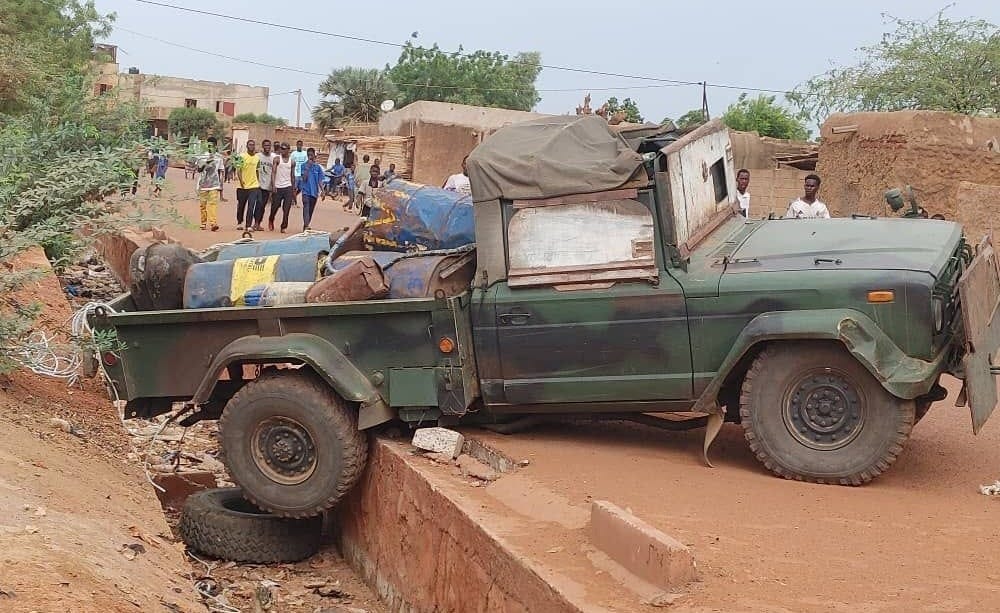
By nightfall, JNIM had withdrawn from Sévaré, with the Malian army largely retaking control and gradually clearing the city amid sporadic gunfire. Mopti, which lies close to Sévaré, was entered by JNIM and briefly claimed by them, though it appears to have been largely uncontested. The main FAMa deployments in this area are within Sévaré, with no major bases in Mopti itself. This likely meant that resistance there was limited. As is the case with JNIM, they do not intend to hold the urban areas they capture long term, and they withdrew when they left Sévaré, with the city returning to normal shortly after. While JNIM ultimately do want to seize control of Mali and beyond, they currently do not have the capabilities required to secure the territory they attack.
Russia’s Role
Despite the agreement in Kidal, Africa Corps was heavily involved in the Malian response throughout the weekend. They conducted airstrikes, participated in ground combat, and provided aerial reconnaissance. There are confirmed Russian deaths from the fighting, and a Russian helicopter operated by the Africa Corps was shot down near Wabaria, with its crew killed.
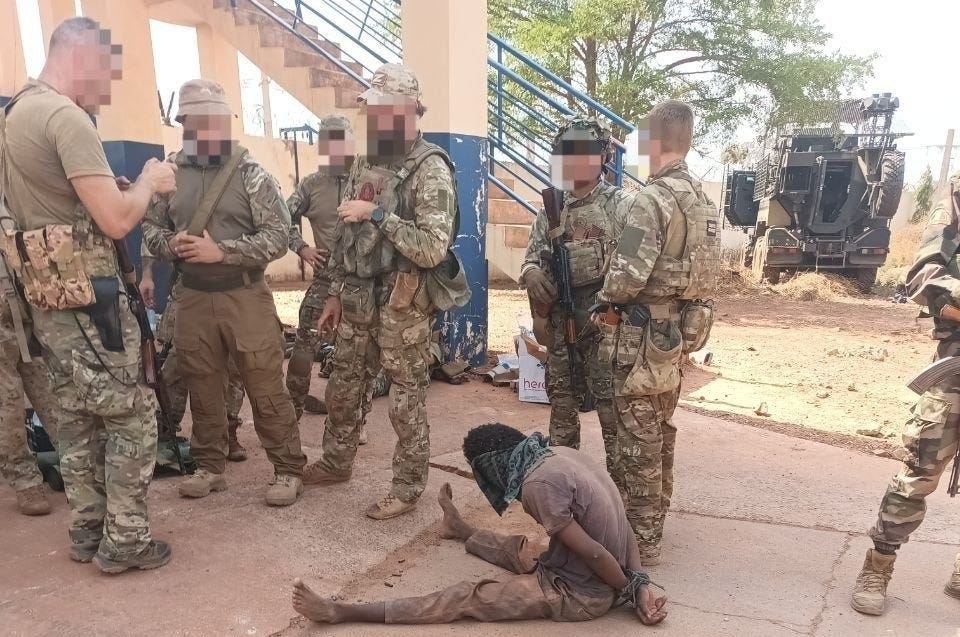
At the same time, JNIM made a notable gesture toward Russia, calling on Africa Corps to stay out of the conflict in exchange for not targeting Russian forces sheltering inside besieged FAMa bases. Though they have continued to fight in the stronghold cities, Russia appears, to some degree, to have made the most of this early offer, withdrawing from Kidal, where the situation was more precarious and reinforcements unlikely to arrive in time.
According to local sources speaking to analyst Brant Philip, the Russian negotiations go beyond just Kidal. According to him:
“…negotiations are ongoing regarding the peaceful handover of several other northern Malian cities from the Africa Corps to the JNIM / FLA coalition, the Malian army/government are not involved in those talks.”
The dynamic raises questions about the nature of the Russian commitment to the Malian government, particularly following the death of Camara, who had been instrumental in building that relationship. While forces that fought alongside the Russian mercenaries in cities like Sévaré will appreciate the support, FAMa troops and the Malian population will no doubt hear of Kidal, where they withdrew instead of standing by their allies.
The AES confederation
The FLA issued a request to the other members of the AES confederation, Niger and Burkina Faso, not to intervene in the fighting in Mali. In practice, neither member state is in a position to do so in any significant way anyway. Both are deeply engaged in their own counterinsurgency fights and lack the resources to deploy meaningful forces long-range, which would make involvement beyond a token force impractical.
The request, though, carries little weight as the FLA have little ability to carry out attacks inside Nigerwith only loose control along the border between Mali and Niger. Burkina Faso is a long way from FLA territory and likely not at risk from any possible retaliation for getting involved.
Drones were used by the FLA during the offensive to track their own forces and coordinate the offensive. This is a capability previously seen in the Islamic State’s attack on an airport in Niger, and a sign of growing tactical sophistication and use of drones among non-state armed groups in the Sahel.
So what has changed in Mali?
While the attacks were widespread and coordinated, most of the bases taken or attacked have already been resecured or will be over the coming week. This is not surprising. The strategy employed by JNIM across the areas they operate is to overwhelm FAMa bases, seize as much equipment as they can, and withdraw again.
As was the case when I covered the attacks back in November last year (see the article below), the apparent initial success of the attacks could give the impression that the Malian government is on its last legs. In both the November strikes and the ones this weekend, even the capital city was not safe from infiltration and attack.
Why Bamako isn’t about to fall

Reports that JNIM fighters have reached the outskirts of Bamako, combined with evacuation recommendations and orders from France, the United Kingdom, and others, have led to claims that the group is on the verge of capturing the capital.
However, it would take significant resources to successfully hold bases they capture long-term. If they did, the Malian armed forces would be able to use the same strategies, with the added benefit of air support, to retake the bases with heavy JNIM casualties.
JNIM’s objective is to create an Islamic State beyond Mali, but in their current position, that is a future goal. The Malian armed forces will need to be weakened significantly before JNIM can start to transition to securing territory.
The notable territorial change is not with the JNIM attacks, but the FLA. With the capture of Kidal, they have returned to holding a city. Unlike JNIM, the FLA do attempt to hold onto territory, and the fact that Bourem and Gao have been taken, at least temporarily, will allow for some degree of preparation for a counterattack. Due to the location of Kidal, government reinforcements take quite some time to reach the city. If they have to fight on the route there, that will delay further and require a more significant force. That is not to say that it’s not doable, after all, the Azawad movement was in control of Kidal briefly in 2023, before a convoy of FAMa and Wagner forces advanced from Gao and took the city. Although the force was harassed for much of the journey, it was only slowed and not stopped entirely.
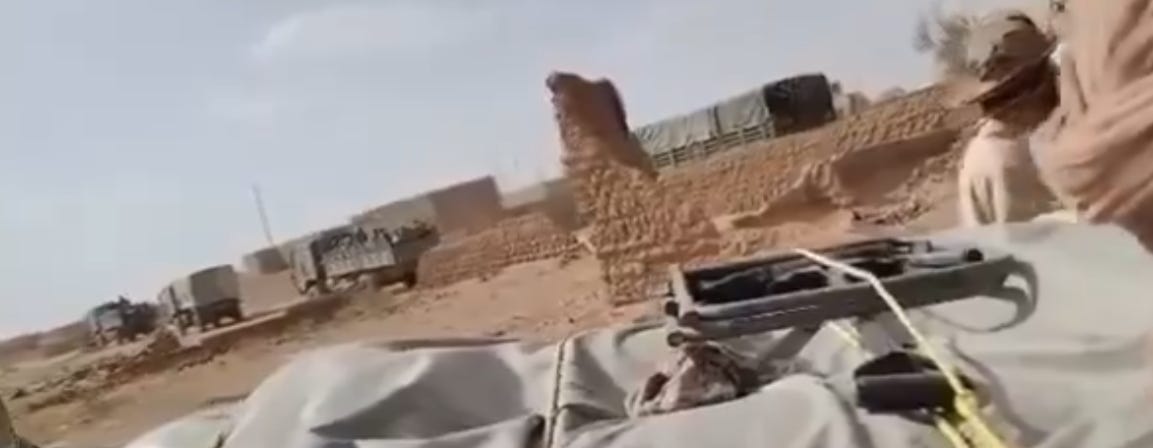
The relationship between Mali and Russia will be one to keep an eye on over the coming months and years. Defence Minister Camara being killed, and Russian mercenaries accepting the offer to withdraw from Kidal, leaving behind their Malian colleagues, will harm the relationship between the two countries. The reaction from Russians has, as it has been in the past, been highly critical of the Malian Armed Forces. Mocking their capability and professionalism. It’s not likely to be fatal for the relationship, but it may open the door to a easing of tensions between Mali (and possibly the wider AES) and the West.
The most significant outcome of these attacks, though, is not the losses or the territorial changes (or lack thereof). It is the open alliance between JNIM and the FLA. It has long been known that the separation between the groups is fairly loose, and coordination to some degree has happened before. Some forces have even moved between fighting for one group or another. However, until now, it has been unofficial. That ambiguity has enabled greater international support for the Azawad movement, at least in the public sphere. This clear announcement of an effective alliance makes the chance of any future Western support for the Azawad Liberation movement all but impossible.