

Why do Sahel bases fall so often?
Poor base design, insurgent strategy, and a cycle of looting explain why government outposts keep falling.

Warfare in the Sahel
If you have been following the insurgencies in the Sahel region, you will no doubt have seen reports of military bases being captured by JNIM, ISSP, the Tuareg FLA, or one of many other groups.
These base raids and captures are fairly regular, and seeing them continue to crop up on your news feeds can quickly give the impression of a steady, continuing advance by these groups into government-controlled areas.
That’s largely not the reality though. The attacking forces will attack the army bases not to seize territory but to gather supplies. While not impossible, it can be challenging for these non-state actors to obtain new equipment through other means.
These military outposts will contain various military vehicles: trucks, technicals, motorbikes; they will also have weapons and ammunition, and fuel. Not to mention the attacking forces will sometimes take members of the garrison as prisoners, as occurred just recently in Niger.
A leaked internal radio dispatch 2 weeks ago confirmed that a Nigerien National Guard outpost had been raided by JNIM, who had seized 3 technicals and 7 motorbikes. There was later confirmation from JNIM itself that small arms, as well as 7 members of the garrison, were also captured.

In the footage, shared by Hamid Amadou N’gadé on Twitter (X), much of the captured equipment can be seen set out and includes more than a dozen AK-type rifles, at least 5 LMGs, a drone, radios, and a significant quantity of ammunition.
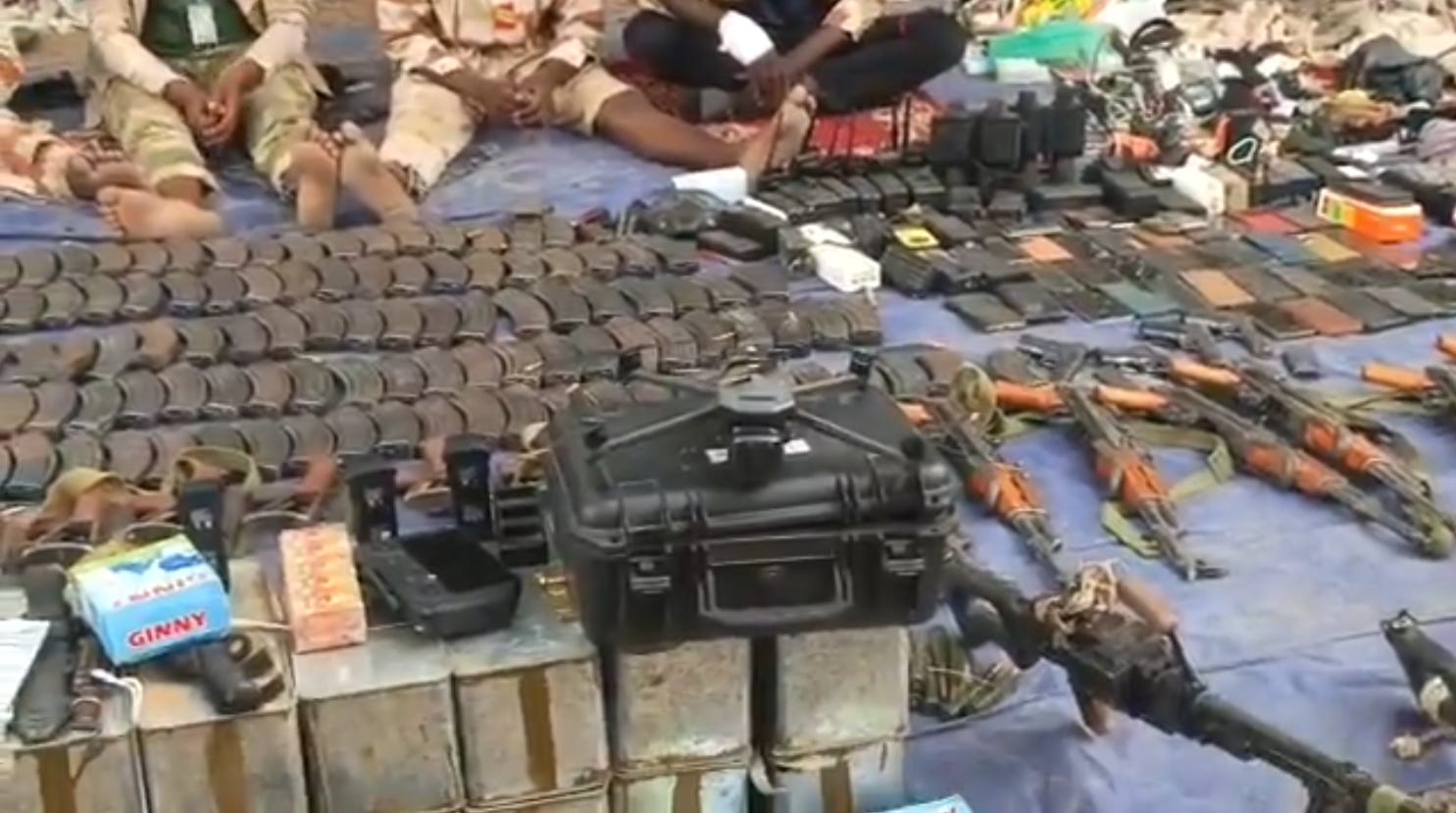
The captured equipment allows the groups to sustain themselves and carry on their insurgencies more effectively. The army will then return to the bases to allow them to project force in and around the nearby settlement until another attack occurs.
So why do these bases seem to fall so easily, and why don’t the groups hold onto them?
Why do they fall?
The reason for the bases falling in what appears to be such an easy way is down to a few different factors.
Objectives
Firstly, the objectives of the Army and the insurgent groups are very different. The army’s goal is to project force across the whole country they are responsible for, and secure as much of that territory as possible. Therefore, they deploy forces to outposts across the country and conduct patrols from those bases to secure the nearby towns and villages.
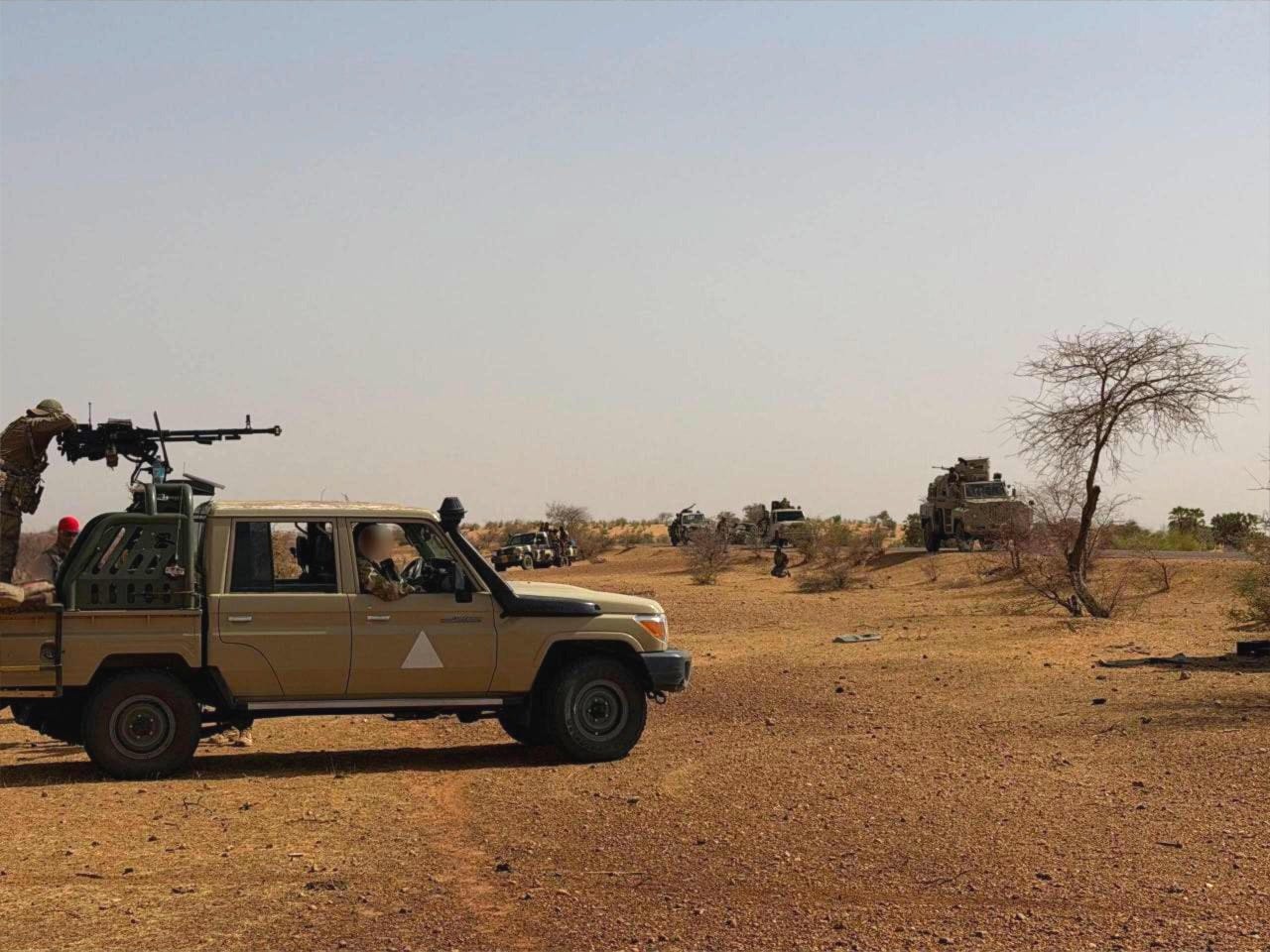
This is somewhat similar to the objectives of a group like the FLA, who intend to capture territory. This is why they have held onto the base in Kidal, Mali, after seizing it last month.
The primary objective of a group like JNIM or ISSP, on the other hand, is to cause damage to the state's armed forces and destabilise the government. Ultimately, they will want to secure territory, but the main goal is to weaken the army significantly first.
If the army can be successfully weakened, then when these groups do attempt to take control of territory, the state will be weak, and any organised resistance will be reduced.
This difference in strategy is why the bases can fall so easily. JNIM typically don’t operate from any easily identifiable or permanent bases that the army could target. They are more scattered and mobile, coming together for attacks. The army, however, has clear static bases where they are stationed, which the insurgent groups can plan attacks on far in advance.
After the FLA/JNIM coalition took control of Kidal and the base there, the government forces have carried out strikes on the City and the Base.
Strategy
JNIM and ISSP are outnumbered by any one of the states which they are fighting and therefore utilise defeat in detail to achieve successes. Defeat in detail is a straightforward strategy, where the attacker concentrates its forces to strike and overwhelm the dispersed defending forces.
The simple diagram below illustrates the strategy. The Red side is outnumbered overall 7-to-3, so defeating Green is only possible by overwhelming one position at a time. In this case, changing the odds to 3-to-1 in their favour.
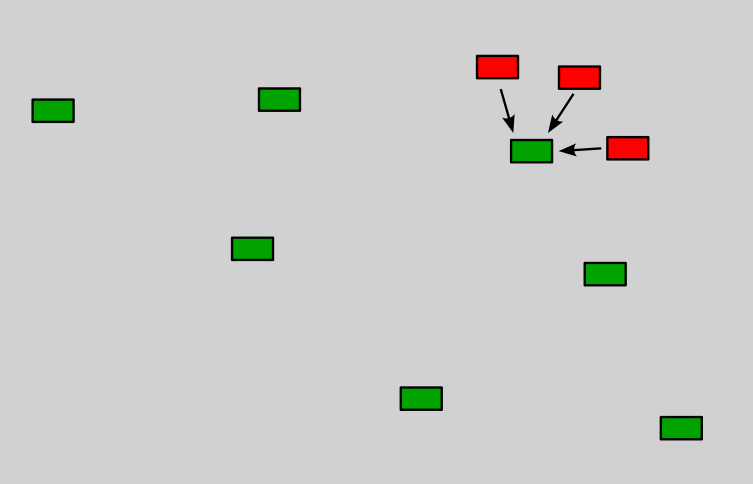
It seems obvious and is the normal way breakthroughs are achieved in any war. It is used by both Russia and Ukraine to attempt advances. The attacking side will spread forces more thinly across the line to concentrate forces in one area. The goal there is to reduce forces by a small enough amount that they aren’t creating weaknesses in their defences.
Another diagram. The one below shows a more conventional method of the strategy. Where bases have to be held. In this scenario, both forces have 500 units. Green spreads them evenly along the line, while red brings a small section from each to concentrate them in the centre. This gives them a near 2-to-1 advantage here while keeping the ratios elsewhere along the front close enough to even to prevent an attack by Green.
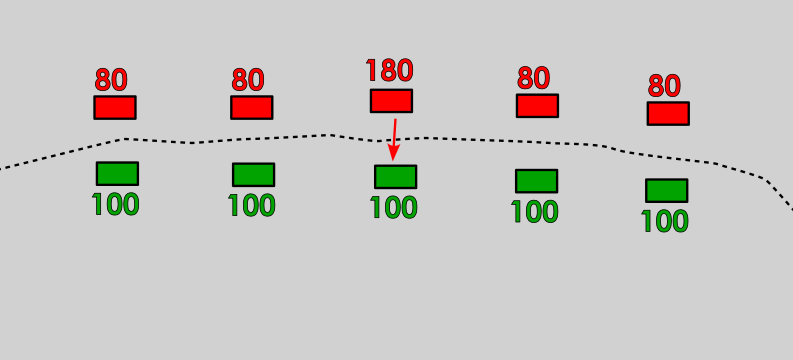
The difference is that in an insurgency like that in the Sahel, the strategy is enhanced by the attacking side not needing to defend any territory at all, while the other side must attempt to defend everywhere all at once.
The defender is far less mobile, and the attacking side can therefore overcome the defender’s overall numerical and any technological superiority by being numerically superior in just one location.
Base design
Another reason for the failure of the bases is their design.
Many of the bases in Mali, for example, are former MINUSMA central bases or outposts and follow very similar layouts. The design of the bases, though, is not appropriate for the strategies available to the Malian Armed Forces or the era of conflict that we are now in.
